
Insurance for
roofing businesses
Protect your crew, your trucks, and your tools. Casey covers residential, commercial, and storm-restoration roofers — general liability, workers’ comp, auto, and equipment in one place. One conversation in plain English: we compare the whole market and bring back the best value for your risk.
What it is
What roofing insurance covers.
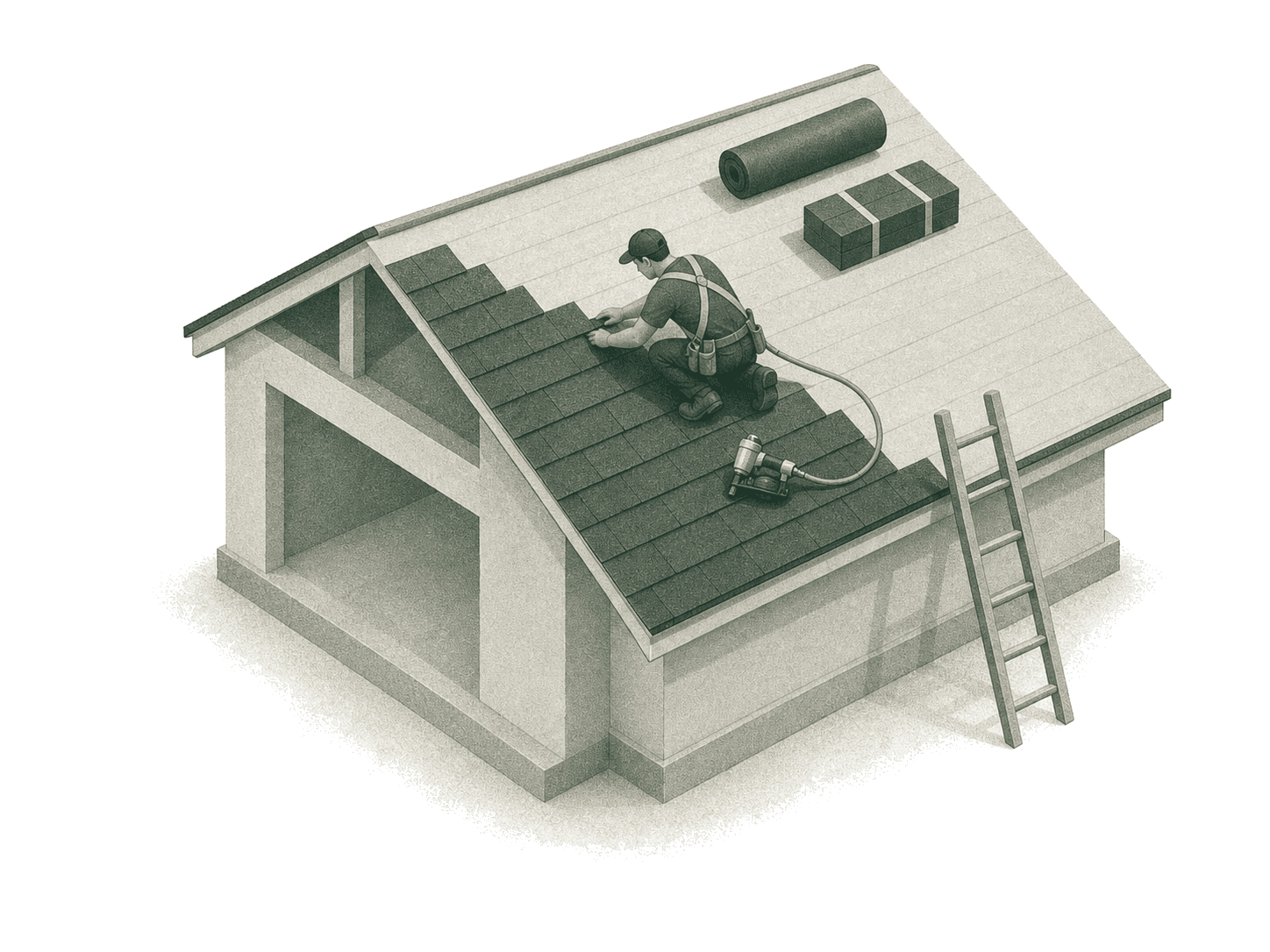
“Roofing insurance” isn’t one policy — it’s a stack of a few, built around how you actually work. Most roofing operations carry these five lines.
You don’t need to know which ones you need. Tell us about your work and your broker builds the stack.
Who needs it
Every kind of roofing shop — priced differently.
Residential re-roof & repair
The broadest carrier appetite — most markets will quote you. Which means the job is getting them to compete, not finding one who’ll say yes.
Commercial flat & torch-down
One torch kettle and most standard markets decline. We submit to carriers that rate hot work separately and document your fire-watch procedure.
Steep-slope & metal
Height and pitch drive the rate. Carriers that write steep-slope want fall-protection detail on the application — we make sure it’s there.
Sub-heavy shops
Past ~25% subcontracted labor, many markets walk. We place sub-heavy shops weekly — the fix is the right carrier plus clean sub COI collection.
New roofing ventures
First-year shops pay more, but several of our markets write them — expect questions about your years on a crew before you owned the business.
Something in between?
Most shops are a mix. Describe your actual work split in the form — that’s what your broker prices.
Insurance without the homework.
01
One conversation
Tell us what you do in plain English. We ask the right questions, tell you what coverage you need, and build the application for you.
02
Pay less for more
Our technology scans the market and finds the best value for your risk. Your broker then tailors the coverage — no gaps, nothing you don’t need.
03
White-glove service
Instant self-serve COIs. Around-the-clock support for everything else. No office hours, no waiting on a callback.
04
A broker who picks up
A licensed broker owns your account through every renewal. Call, and someone who knows your business answers.
Common questions
Roofing insurance, answered.
How much does roofing insurance cost?
It depends on payroll, receipts, work mix, and claims history. As a rough anchor, General Liability for a small residential crew often runs $3,000–$8,000 a year; hot work and commercial height push it up. We quote your actual mix rather than a generic roofing rate.
I got declined for torch-down work. Can you still place me?
Usually, yes. Declines for hot work mostly mean the submission went to markets that exclude it by default. We work with carriers that rate torch-down on its own terms — expect questions about your fire-watch procedure and kettle handling.
How fast can I get a COI for a general contractor?
Same day once you’re bound. After that, certificates are self-serve — pick the holder, download, done. Your GC doesn’t wait on an agency’s office hours.
What do you need from me to quote?
Your state, crew size and sub ratio, a payroll estimate, and your work mix — residential vs. commercial, steep vs. flat, any torch-down. Loss runs help if you have them; we’ll work with whatever you can send.
Do my subcontractors need their own coverage?
Yes — and you should collect a COI from each one. Your GL can pick up uninsured subs, but your premium is rated on the ratio, so clean sub paperwork directly lowers what you pay.
I’m a brand-new roofing business. Can I get covered?
Yes. New ventures pay more for the first 12 months, but several of our markets write them — expect questions about your own years on a crew before you owned the business.
Let’s get started.
Send it in and a licensed broker calls you back right away.
Want to speed up your quote?